Two Headers and a Lifetime of Grit: The Legacy of Steve Bruce
Prologue — Fergie Time
The clock at Old Trafford ticked deep into injury time, the tension so thick it seemed to muffle even the roar of 40,000 voices. On the touchline, Sir Alex Ferguson was pacing like a man on the edge of a cliff. Manchester United were level with Sheffield Wednesday, but a point would not do. The Premier League title — the first in the club’s history, the first top-flight crown in 26 years — was slipping away.
Out on the pitch, Steve Bruce was already forward again. He had spent the entire afternoon straddling the line between defender and desperate striker, reading the game as only a captain could. His shirt clung to him, the white collar drenched in sweat, his chest heaving. The ball was placed on the corner quadrant, the Stretford End behind him sensing one more chance.
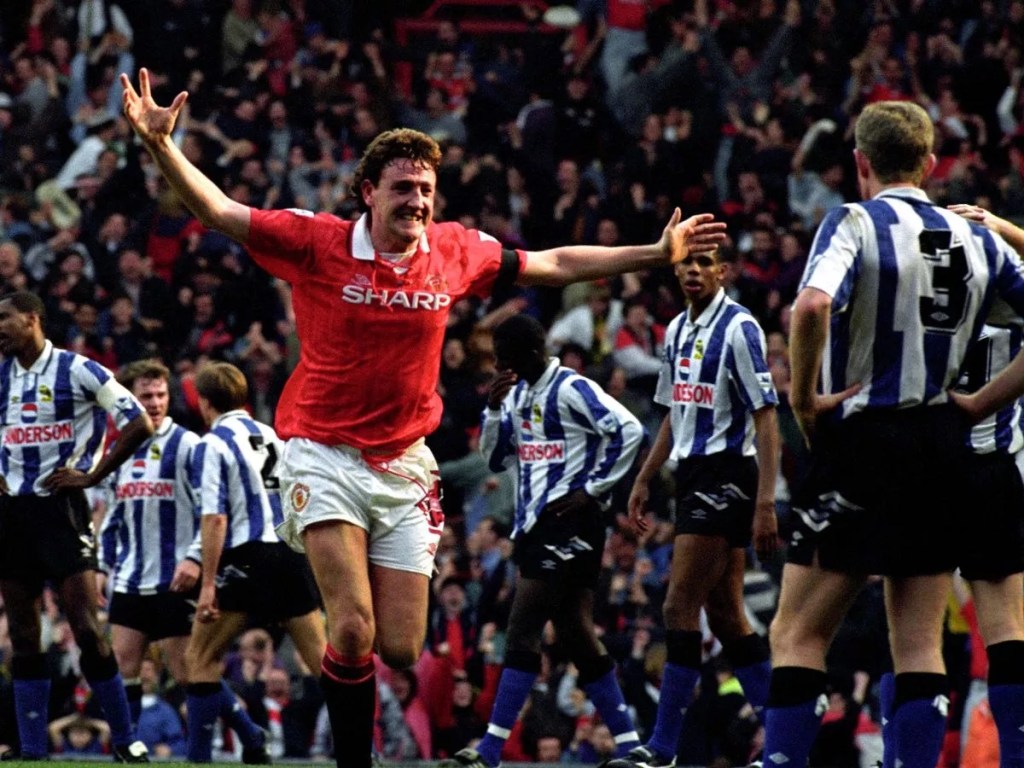
Gary Pallister rose first, the ball spinning high into the six-yard box. Bruce read the flight instantly — the same way he’d read countless crosses in a career built on anticipation and bravery. He launched himself forward, every muscle straining, and met the ball with a thundering header. The net rippled. Old Trafford exploded.
Ferguson turned to his assistant Brian Kidd, who sprinted onto the pitch in celebration, arms flung to the heavens. The goal had come in the 96th minute. It was the birth of what the football world would come to call “Fergie Time.”
But this wasn’t just another dramatic winner. It was Steve Bruce’s moment — the embodiment of his entire career. Resilient, fearless, decisive. A man who had clawed his way from the muddy pitches of the Third Division to the summit of English football, and who was now dragging his team, almost by force of will, towards the promised land.
That April afternoon crystallised everything Bruce represented as a player. He had already scored earlier to level the match, another towering header under pressure. Now, with the league on the line, he had produced again. Two goals from a centre-half in the dying minutes of a season-defining game. It wasn’t luck. It was preparation meeting opportunity, leadership meeting necessity.
In the dressing room afterwards, the celebrations were raucous, but Bruce was already thinking about the next match. That was his way. Ferguson, beaming, told the press: “That’s what champions are made of — players like Steve Bruce.”
Wallsend to Gillingham: The Making of a Leader
Steve Bruce was born in Corbridge, Northumberland, and grew up just outside Newcastle, in Daisy Hill near Wallsend. From those earliest days, his footballing identity was forged in one of England’s most renowned grassroots incubators: the Wallsend Boys Club. In his own words, Bruce reflected on that environment:
“It’s got a wonderful tradition, and the number of professional players to come out of that boys club is incredible. … I spent the best part of my youth in that boys club. … In my opinion, more kids should be doing exactly the same; it’s how I started on the journey to where I am now.”
At Wallsend, Bruce trained and competed with toughness and humility as his currencies—traits which would prove essential in his rise. Despite being turned down by his beloved Newcastle United, as well as Sunderland, Derby County, and Southport, Bruce almost walked away from professional football entirely. It was at this low point that fate intervened: Gillingham manager Gerry Summers, having noticed Bruce while scouting at a youth tournament, offered him a trial. Bruce, prepping to begin work as an apprentice plumber, accepted—and everything changed.
Arriving at Gillingham in 1979 as an apprentice, Bruce was initially deployed in midfield. But one of the club’s youth coaches, Bill Collins, saw something more in him—and repositioned him as a centre-back, a move Bruce later credited as being “the single biggest influence on his career” . It didn’t take long for Bruce to make his impact felt: after shining in the reserves—including scoring 18 goals despite playing in defense—he made his senior debut in a League Cup tie against Luton Town on 11 August 1979. By season’s end, he’d already claimed the club’s Player of the Year award.
Over the next five seasons, Bruce became a fixture in Gillingham’s backline. He made over 200 appearances and was twice named to the PFA’s Third Division Team of the Year. In a later reflection, he emphasized how those seven years shaped his identity:
“I had 235 games for Gillingham in the old Third Division. Everybody associates me with Man United and winning things, but I had seven years at Gillingham and three at Norwich. One of those years we got relegated. Until I was 30, 31, I hadn’t really won anything.”
It wasn’t just the playing minutes that mattered—it was the lessons learned. Bruce recalled:
“I was always determined not to work down the shipyards,” he says. “But when you’ve suffered like that, you realise how hardened you’ve actually become to misfortune. Once I got in at Gillingham I wanted to improve and take the next step up and then the next and then the next.”
That steely mindset—born from rejection, blue-collar roots, and the crucible of lower-league football—laid the groundwork for the leadership and resilience that would later help him succeed on English football’s biggest stages.
Norwich City — From Lower Leagues to Top-Flight Credibility
By the summer of 1984, Steve Bruce had established himself as a resolute, goal-scoring centre-back at Gillingham. His performances had earned him more than 200 appearances and Easter accolades in the PFA Team of the Year for the Third Division, but it was at Norwich City where his career truly began to ascend.
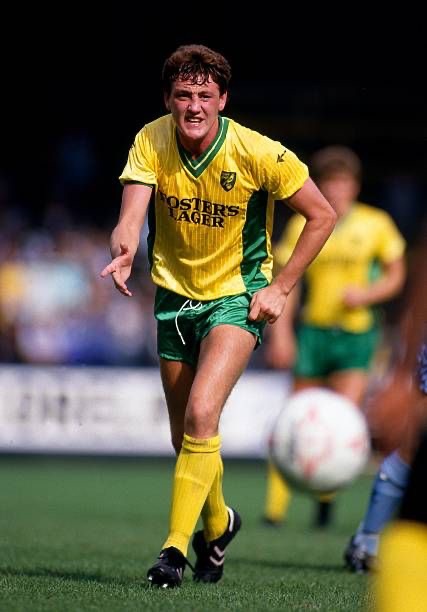
Bruce’s debut for Norwich couldn’t have been more dramatic: he scored an own goal inside the first minute against Liverpool. Yet peppered with early adversity was also brilliance. In the League Cup semi-final, Bruce found redemption—netting the winner against local rivals Ipswich Town. That strike helped Norwich to lift the trophy, and Bruce was named Player of the Season in 1984–85.
This was more than a personal vindication—it was proof that Bruce belonged at the top level. A teammate’s reflection years later encapsulates it best: “I have wonderful memories…I will always be eternally grateful to Norwich, they gave me my big chance.” That big chance fully came into focus in his own words, mindful of his modest beginnings and gratitude for the opportunity to shine on the bigger stage.
Bruce’s impact didn’t stop at cup glory. Despite Norwich’s relegation that same season, he demonstrated unwavering resilience—playing every match the following year as the club regained promotion at the first time of asking in 1985–86, and earning promotion again to the First Division, where they secured an impressive fifth-place finish.
With his growing stature, Bruce was named club captain after the departure of Dave Watson, a role that recognized both his leadership and on-pitch influence . It was during this period that the murmurs of his potential began to attract attention from England’s elite. Clubs like Manchester United, Tottenham, Chelsea, and Rangers pursued him—but it was United who ultimately won the race, despite Norwich briefly increasing their asking price to as much as £900,000, prompting Bruce to decline playing further until the deal was struck.
Throughout these seasons at Carrow Road, Bruce’s growth was unmistakable. He evolved from a tough lower-league battler into a capable top-flight leader—unafraid to bear responsibility in both defence and scoring, and with the temperament to handle setbacks with courage.
The Sir Alex Call — Arrival at Manchester United
By the winter of 1987, Steve Bruce’s ascent from Norwich City had not gone unnoticed. Clubs from across England—including Tottenham, Chelsea, and Rangers—were monitoring the commanding centre-back’s progress. But it was Sir Alex Ferguson who managed to win the race for Bruce’s signature. After protracted negotiations, Manchester United paid £900,000 in December to bring Bruce to Old Trafford—a deal agreed just before Christmas, despite Norwich trying to demand even more.
Bruce’s own words captured the ambition boiling beneath the surface: “I would walk across broken glass from Norwich to Manchester to play for United.” There was no lack of determination on his part, and Ferguson recognized immediately that the club’s spine needed reinforcement—particularly after injuries plagued defenders like Paul McGrath and Kevin Moran. “Centre‑backs were the foundation of my Manchester United sides,” Ferguson would later write, singling out the eventual partnership of Bruce and Gary Pallister as transformational for the club’s resurgence.
In his debut campaign (1987–88), Bruce steadily slotted into the heart of defense, costing United a reliable presence they had lacked. It wasn’t only about his defensive positioning—it was his consistency and willingness to lead. Ferguson trusted him implicitly, even when a lingering knee issue surfaced during medicals. Bruce pushed through the concerns; his cultural fit and professionalism outweighed any injury fears.
Over the next three years, Bruce transformed from new signing to indispensable captain. He emerged as the backbone of Ferguson’s earliest trophy-winning sides. He captained United to their first FA Cup under Fergie in 1990 and added a European Cup Winners’ Cup in 1991. Remarkably, Bruce wasn’t just a defensive hero—he took penalties in the 1990–91 season and scored an astonishing 19 goals across all competitions.
But his defining moment arrived in April 1993, in a league-deciding clash against Sheffield Wednesday. It was late in the game, United still needing to secure the crucial points that would propel them to their first English league title in 26 years. Bruce delivered twice—headers that turned impending defeat into a title-winning triumph in “Fergie Time.” That afternoon etched Bruce’s name into Manchester United folklore.
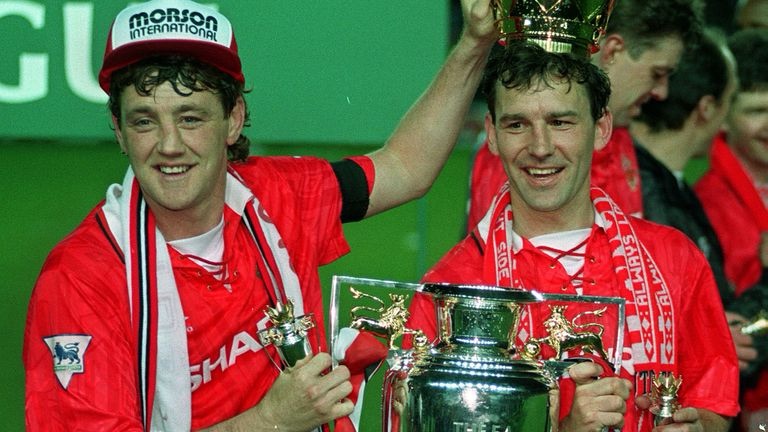
Bruce would share the honor of lifting that inaugural Premier League trophy with Bryan Robson. It was a symbolic handover, the new leader of a new United era joining hands with the fading legend of the Busby years. Ferguson deliberately built his side around leadership at the back; he found it in Bruce’s drive and consistency.
In that phase—marked by the 1993 title and then the 1993–94 Double—Bruce firmly established himself among the Premier League’s greatest defenders. He wasn’t theatrical; he wasn’t flashy. Instead, he anchored United’s spine, enforced standards at every training ground and match, and instilled belief that they could go further than anyone doubted.
The Captain Without the Armband — Early United Years
When Steve Bruce arrived at Manchester United in December 1987, Bryan Robson was already the established club captain — a talismanic figure whose leadership credentials were beyond question. Yet from almost the moment Bruce set foot in the Old Trafford dressing room, it was clear that Ferguson had acquired another general. The armband might have been Robson’s, but Bruce quickly became his deputy in all but name.
Bruce’s style was less about chest-thumping speeches and more about consistency, example, and accountability. Gary Pallister, who joined in 1989 for a then British record fee for a defender, recalls the immediate impact Bruce had on him:
“When I came to United, Steve was the guy who took me under his wing. He had this way of making you feel part of the team instantly, but also making sure you knew the standards. He was a warrior — if you crossed the white line, you wanted him next to you.”
That partnership — Bruce’s rugged, aerially dominant, no-nonsense defending paired with Pallister’s pace and elegance — became the bedrock of United’s rise. Ferguson often referred to them as “the best central defensive pairing in the country” during the early 1990s, and the statistics backed it up. Between 1990 and 1994, United conceded fewer goals than any other top-flight side in England.
Off the pitch, Bruce was beginning to emerge as one of Ferguson’s “lieutenants” — trusted senior professionals who could enforce the manager’s vision within the squad. Former United full-back Denis Irwin once remarked:
“Steve was the one in the dressing room who would look you in the eye and tell you if you weren’t pulling your weight. He wasn’t loud for the sake of it — but if something needed saying, he’d say it. And you’d listen.”
This was also the period when Bruce’s knack for goals from defence began to set him apart. In the 1990–91 season alone, he scored an incredible 19 goals in all competitions — many from the penalty spot, but plenty from set-pieces, where his timing and bravery made him a constant threat. In an era when centre-backs rarely contributed much beyond defending, Bruce’s attacking output gave United a crucial extra dimension.
The trophies started to arrive, slowly at first but steadily building momentum. The 1990 FA Cup win over Crystal Palace ended a five-year wait for silverware and gave Ferguson breathing space in the job. Bruce played the full 210 minutes across both the final and the replay, marshalling the defence through moments of chaos and fatigue. He followed that with the 1991 Cup Winners’ Cup triumph against Barcelona in Rotterdam — another game where United’s defensive discipline and aerial strength, hallmarks of Bruce’s game, proved decisive.
Ferguson later wrote in his autobiography:
“I could rely on Brucey. He wasn’t just a good player; he was one of those who could see the game from my perspective. He understood what I wanted and he would make sure others delivered it.”
By the 1991–92 season, Bruce’s influence was undeniable. With Robson struggling through injuries, Bruce captained the side regularly, guiding them to a League Cup triumph against Nottingham Forest — United’s first in that competition. That season ended in disappointment in the league, with Leeds pipping United to the old First Division title, but the platform was set. Ferguson’s team now had the spine — Schmeichel, Bruce, Pallister, Ince, Robson, and later Cantona — to launch the club into the Premier League era.
Even without the official title of club captain, Bruce was the dressing room’s compass. Young players coming into the side, from Lee Sharpe to Ryan Giggs, quickly learned that Bruce’s approval mattered. Giggs himself has said:
“He was one of the most important people in my early career. He’d give me advice on positioning, on how to defend from the front, on being brave in the right moments. He’d also kick me in training if I got too fancy — in a good way!”
By the summer of 1992, Bruce had become the glue that held Ferguson’s evolving side together. The official captaincy might still have been Robson’s, but the team was already looking to Bruce in the heat of battle. And as the inaugural Premier League season loomed, Ferguson knew that this quiet, uncompromising leader was about to write himself into English football history.
1992–93 — The First Premier League Title
When the Premier League kicked off in August 1992, Steve Bruce was 31 years old — a seasoned professional with more than 500 senior games under his belt, but still without the one prize that defined English football greatness: a league title. For Manchester United, the wait had been even longer. The club had not won the top-flight championship since 1967, and Sir Alex Ferguson’s squad was under intense scrutiny to prove themselves in the new era.
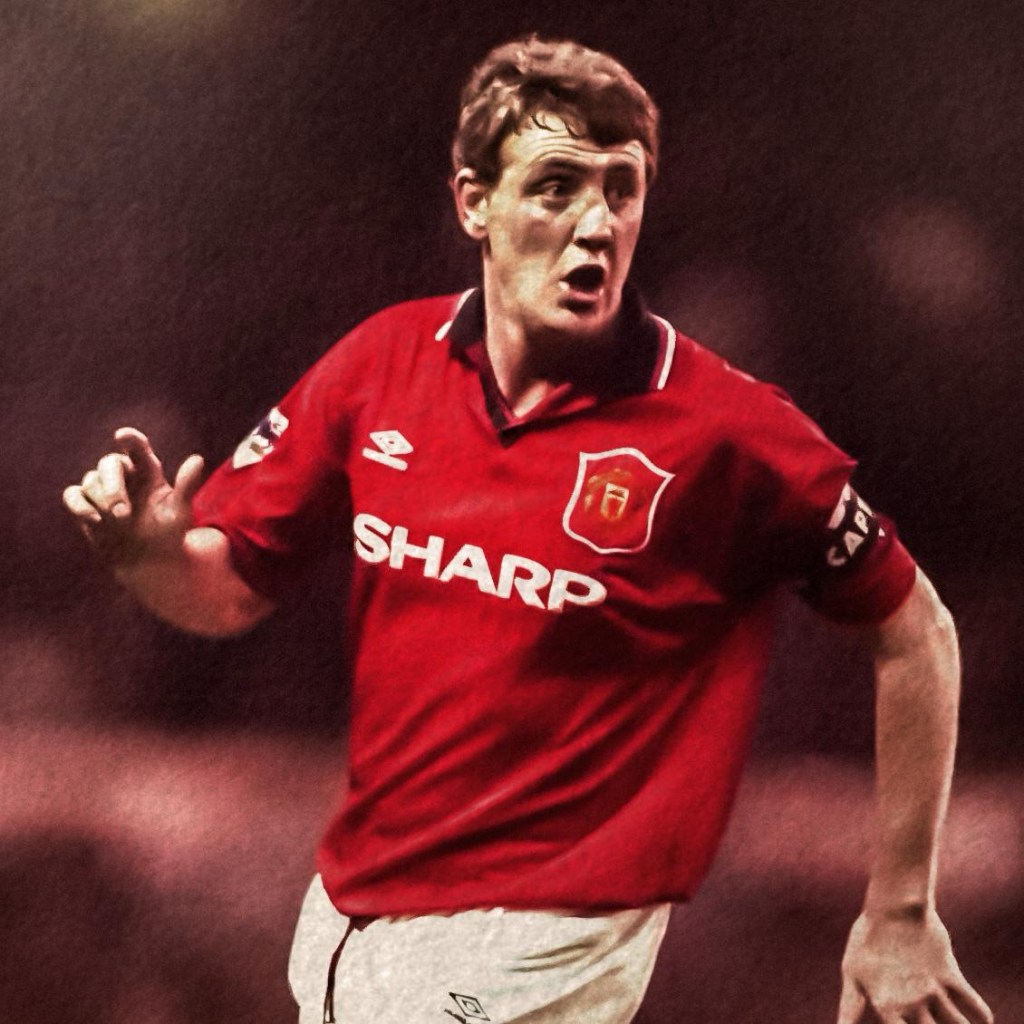
Bryan Robson remained club captain, but injuries meant Bruce wore the armband for much of the season. It was an understated change, but a significant one. Ferguson trusted Bruce to embody his relentless standards on and off the pitch, while leading a squad that blended hardened pros like Mark Hughes with rising stars like Ryan Giggs.
“Brucey was a warrior,” Ferguson later recalled. “You knew he’d run through a brick wall for you, but he was also calm enough to settle the players when the pressure was on. In that first Premier League season, he was the heartbeat of the team.”
United’s campaign started sluggishly, losing two of their first three matches. But Bruce’s partnership with Gary Pallister quickly became the league’s most formidable defensive pairing. United conceded just 31 goals in 42 games — the fewest in the division — and Bruce’s leadership at the back was central to that record.
What truly elevated Bruce from respected captain to United legend came on April 10, 1993, at Old Trafford against Sheffield Wednesday. With the title race still finely poised, United found themselves 1–0 down deep into the second half. As the minutes ticked away, anxiety gripped the stadium. Bruce, never one to hide, strode forward for a corner in the 86th minute and powered home a header to level the score. Old Trafford erupted — but Bruce wasn’t done.
In the 96th minute, with virtually the last attack of the game, United won another corner. Gary Pallister rose to meet it, and the ball looped towards Bruce, who launched himself forward and headed it into the top corner. The goal — immortalised by Ferguson and Brian Kidd’s euphoric celebrations on the touchline — became one of the most iconic moments in Premier League history. That day, “Fergie Time” was born.
Pallister later said:
“You dream of those moments. Two headers from Brucey, both in the Stretford End, both when we needed them most. That’s the stuff that wins you titles.”
Those goals didn’t just win a match — they swung the momentum of the title race decisively in United’s favour. Ferguson’s side went unbeaten in their final seven games, clinching the league with two matches to spare. Bruce had played 42 of the 42 league matches, scoring eight goals — an extraordinary return for a centre-back.
The image of Bruce and Robson jointly lifting the inaugural Premier League trophy remains one of the defining pictures of the competition’s early years. For Bruce, it was vindication after years of graft in the lower leagues, near-misses in the old First Division, and seasons of building under Ferguson.
Ryan Giggs summed it up:
“If you wanted one player to represent what Manchester United was about that year, it was Steve Bruce. Determined, fearless, dependable. He set the standard for all of us.”
Beyond the medals, 1992–93 cemented Bruce’s place in football history. He became the first player to captain a side to the Premier League title and remains one of the league’s most prolific defenders, scoring 36 goals in his United career. More importantly, he became synonymous with leadership in an era when the league’s profile — and the demands on its players — exploded.
Double Glory — 1993–94 Dominance
If the 1992–93 season was about breaking the dam, then 1993–94 was about the flood that followed. Manchester United, under Sir Alex Ferguson, entered the campaign with the swagger of champions and a squad that was now the benchmark in English football. For Steve Bruce, now firmly ensconced as on-field captain in Bryan Robson’s continued absence through injury, this was an opportunity to prove that the title win had been no one-season wonder.
From the first whistle of the new campaign, United played with an authority that made them the most feared side in the country. Eric Cantona’s artistry and aggression were in full flow, Ryan Giggs was maturing into a consistent match-winner, and Roy Keane — signed from Nottingham Forest that summer — brought a ferocity to midfield that perfectly complemented Bruce’s steel in defence. As Keane would later put it:
“Steve was the boss at the back. You knew he’d be there to win every header, make every tackle, and keep the standards up. He didn’t shout for effect — when he spoke, everyone listened.”
Bruce’s partnership with Gary Pallister remained the cornerstone of United’s success. Between them, they combined positional intelligence, physical dominance, and an uncanny understanding that allowed United’s full-backs to push forward without fear. United’s defensive record again ranked among the best in the league, and Bruce’s knack for popping up with vital goals continued — including a trademark header in a tense 1–0 win at Newcastle in March that effectively sealed the title race.
The league campaign was a masterclass in consistency. United finished with 92 points, losing just four games and scoring 80 goals along the way. Bruce’s leadership helped navigate potential pitfalls — none more so than a tense April trip to Leeds, where United ground out a 0–0 draw under hostile conditions to keep their rivals at bay. Ferguson would later cite that performance as emblematic of the “mentality monsters” his captain embodied.
But the Premier League crown was only half the story. In the FA Cup, United swept aside all challengers, with Bruce again central to their resilience. In the semi-final replay against Oldham at Maine Road, with the scores locked at 1–1 late on, Bruce — visibly limping — continued to marshal the defence and win aerial duels as if his life depended on it. Peter Schmeichel, looking back, said:
“You couldn’t ask for a better leader in those games. Steve played through pain you wouldn’t believe. He just refused to give in.”
The final at Wembley saw United face Chelsea, who were swept aside 4–0 in one of the most dominant cup final displays of the era. Bruce’s contribution was less about highlight-reel moments and more about ensuring Chelsea never gained a foothold. Cantona’s penalties and Hughes and McClair’s goals took the headlines, but Ferguson, in the dressing room afterwards, made a point of praising Bruce’s defensive command throughout the cup run.
By season’s end, Bruce had captained United to a second consecutive league title and added the FA Cup for good measure — completing the club’s first league and cup double since 1957. He lifted both trophies with Robson, in what felt like a symbolic passing of the torch. Robson was the figurehead of the 1980s, but Bruce had become the leader of the 1990s United — the man Ferguson relied upon to keep the dressing room focused amid the new glare of Premier League stardom.
Even the opposition recognised his stature. Tony Adams, Arsenal’s captain and himself one of the finest defenders of the era, once said:
“We had our battles, me and Steve. He was hard as nails, but fair. And he could score, which for a centre-half was a nightmare. You couldn’t switch off against him for a second.”
The 1993–94 season also cemented Bruce’s case as one of the most complete centre-backs in the country. He combined leadership, defensive excellence, and attacking threat in a way few could match. His reading of the game allowed United to play higher up the pitch, pressing opponents and forcing errors. His composure under pressure — especially in high-stakes games — set the tone for the squad.
The Final United Years — Injuries, Mentorship, and a Last Hurrah
By the mid-1990s, Steve Bruce had done it all in a Manchester United shirt — back-to-back league titles, an FA Cup, a Cup Winners’ Cup, and a League Cup. But football’s physical demands had begun to exact their toll. Years of uncompromising tackles, aerial battles, and playing through pain had left their mark on his body.
The 1994–95 season was a frustrating one for both Bruce and the club. United were chasing a third successive league title but finished runners-up to Blackburn Rovers. Bruce, now in his mid-thirties, missed significant chunks of the campaign through injury, and Ferguson’s squad went through a period of transition. Bryan Robson’s time as a first-team regular was ending, and younger players like Gary Neville, David Beckham, Paul Scholes, and Nicky Butt were beginning to emerge.
For Bruce, this was a shift in role. While still first choice when fit, he increasingly found himself a mentor as well as a captain. Gary Neville later spoke about Bruce’s influence in those formative years:
“Brucey was brilliant for me. He’d talk to me all the time, explain positioning, when to go forward, when to hold. He made me feel part of the team. If you made a mistake, he’d tell you straight, but he never left you feeling alone with it.”
Even with the aches and strains, Bruce remained a formidable presence. His reading of the game, organisational skills, and uncanny knack for scoring key goals hadn’t faded. The 1995–96 season offered him one last great flourish. United, re-energised by the “Class of ’92” and the arrival of Andy Cole, launched a fierce title battle with Kevin Keegan’s free-scoring Newcastle United.
It was a season remembered for Keegan’s famous “I would love it” rant, Eric Cantona’s return from suspension, and United’s relentless pursuit in the run-in. Bruce, despite missing games through injury, played a pivotal role in key fixtures. In a 1–0 win over Arsenal at Old Trafford, his marshalling of the back line kept Ian Wright and Dennis Bergkamp unusually quiet. In the FA Cup, he was part of a defensive unit that conceded just two goals across the entire campaign.
The season ended in glory: United secured the Premier League title and completed the double by beating Liverpool in the FA Cup final. For Bruce, lifting the trophy alongside Cantona was a symbolic moment — the veteran warrior alongside the talismanic artist, bookending an era of dominance. Ferguson made a point of praising Bruce’s contribution despite his reduced appearances:
“He was the foundation stone of everything we built. Even when he wasn’t on the pitch, his presence was felt. He made sure the standards in the dressing room never slipped.”
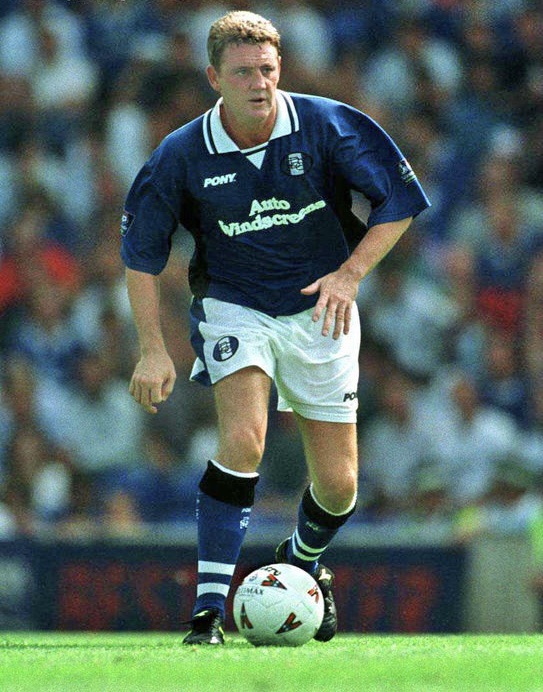
By 1996, however, the writing was on the wall. Bruce was now 35, and Ferguson was building a younger, faster defensive line to compete in Europe. That summer, Bruce moved on to Birmingham City, bringing an end to a nine-year spell at Old Trafford in which he had made 414 appearances, scored 51 goals, and captained the club to three league titles, three FA Cups, a League Cup, and a European Cup Winners’ Cup.
Gary Pallister summed up his friend’s departure simply:
“I don’t think we’ll see another Steve Bruce. He was brave, he was reliable, and he was a leader. The club owes him more than most people realise.”
Birmingham City and the Sunset Years
When Steve Bruce left Manchester United in the summer of 1996, he could easily have retired with his medal haul and reputation intact. At 35, he had already achieved more than most players could dream of: three league titles, three FA Cups, a League Cup, and a European Cup Winners’ Cup. But Bruce wasn’t ready to hang up his boots. Instead, he joined Birmingham City in the First Division, eager to keep playing and to pass on the values that had defined his career.
Birmingham — Player, Leader, Mentor
Bruce slotted immediately into the heart of the Birmingham defence, bringing Premier League-level organisation and resilience to a team with promotion ambitions. While the pace of the Championship was less refined than the top flight, it was physically unrelenting — and Bruce’s reading of the game became his greatest weapon.
Trevor Francis, Birmingham’s manager at the time, later praised the signing:
“He wasn’t just a player; he was a standard. When you’ve got someone who’s captained Manchester United, everyone in the dressing room listens.”
Bruce’s influence went beyond matchdays. Younger defenders, many of whom had never played alongside someone with his pedigree, absorbed his knowledge daily in training. His presence raised expectations and professionalism throughout the squad.
On the pitch, Bruce remained a threat from set-pieces, chipping in with important goals, but it was his defensive leadership that stood out. Birmingham’s backline became one of the most disciplined in the division during his tenure, and the team made multiple play-off pushes while he was there.
Sheffield United and the First Steps Toward Management
In 1998, Bruce made a short move to Sheffield United, a club also pushing for promotion. His time there was brief — just a handful of appearances — but it served as a bridge to the next phase of his footballing life. Bruce was already taking on more of a coaching and organisational role behind the scenes, offering tactical input and helping to guide younger players.
By the end of the 1998–99 season, Bruce accepted the role of player-manager at Sheffield United. Although his managerial career would ultimately span decades, this transition showed that his leadership skills were not confined to the pitch. He was beginning to think like a manager: shaping training sessions, assessing tactics, and managing personalities.
The Physical Toll and Retirement
By the time Bruce finally retired from playing in 1999, he had made over 900 professional appearances in all competitions — a staggering total in an era of heavy pitches, physical marking, and far fewer sports science advances. He had scored more than 100 career goals, an extraordinary tally for a centre-back, and won 12 major honours.
In his own words:
“I was never the quickest, never the flashiest. But I gave everything, every game. That’s the only way I knew how to play.”
That philosophy carried him through nearly 21 years as a professional footballer, from Gillingham’s lower-league battles to the summit of English football.
From the Pitch to the Dugout — Carrying the Captain’s Mentality into Management
When Steve Bruce retired from playing in 1999, it was no surprise to those who knew him that his next step would be management. He had been, in effect, a coach on the pitch for years — marshalling defences, reading games, and inspiring those around him. His playing career had been defined by resilience, adaptability, and leadership. Now, the question was whether those same qualities could serve him in the dugout.
Sheffield United — The Player-Manager Experiment
Bruce’s first foray into management came at Sheffield United, where he took on a player-manager role in 1998 before fully retiring the following year. It was a steep learning curve. He inherited a squad with ambition but limited resources, and his immediate challenge was balancing the discipline of a manager with the camaraderie of a former teammate.
Reflecting later, Bruce admitted:
“The hardest thing was switching from one of the lads to the boss. But I knew I had to be clear about standards — the same ones I’d demanded on the pitch all my career.”
The Blades narrowly missed out on the play-offs during his brief tenure, but Bruce’s organisational skills and defensive structure began to show through. It was a sign that his leadership was transferable — though, like any young manager, he was still finding his voice.
The Journeyman Years — Learning the Craft
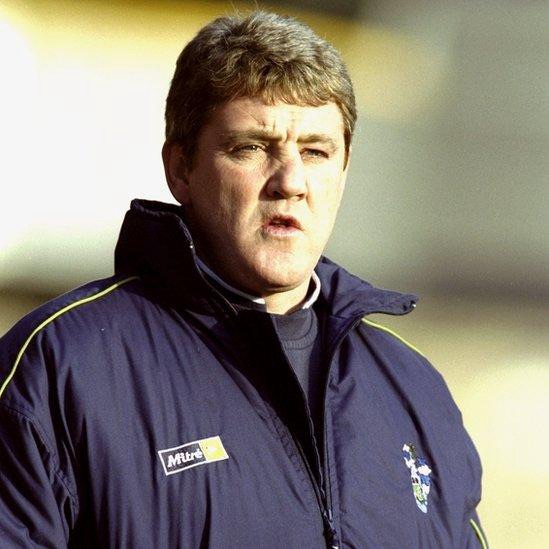
In the early 2000s, Bruce’s managerial path took him to several clubs: Huddersfield Town, Wigan Athletic, and Crystal Palace. These were challenging environments, often marked by tight budgets, short contracts, and high expectations. The Premier League pedigree he brought from his playing days commanded instant respect from players, but Bruce also had to prove that he could inspire results, not just nostalgia.
At each stop, he leaned heavily on the values that had defined his playing career:
Organisation at the back — Building from a solid defence, just as Ferguson had done at Manchester United. Honest communication — Speaking plainly to players about their roles and responsibilities. Mental resilience — Refusing to panic during poor runs, instead reinforcing belief.
A former Huddersfield player recalled:
“Brucey was the same as a manager as he was as a captain. Straight-talking, no excuses, and he always had your back if you gave him everything.”
Birmingham City — Building a Legacy off the Pitch
Bruce’s most significant early managerial success came when he returned to Birmingham City in 2001 — the club he had captained in the twilight of his playing days. This time, he was tasked with guiding them into the Premier League for the first time in over a decade.
In his first season, he achieved just that, winning the 2002 First Division play-off final against Norwich City — a particularly sweet victory for a man who had once worn the Canaries’ captain’s armband. Birmingham stayed in the top flight for four consecutive seasons under Bruce, a period of relative stability that earned him praise for punching above the club’s weight.
Bruce’s Birmingham sides reflected their manager’s playing style: physically committed, defensively sound, and willing to battle for every point. While they didn’t compete for trophies, they consistently overperformed expectations, often troubling bigger sides at St Andrew’s.
Leadership Beyond United
One of the enduring questions around Steve Bruce’s legacy is whether his managerial career can be compared to his playing career. As a player, his success was decorated with trophies and defined by moments of glory. As a manager, it was about grinding out results in tough circumstances, often at clubs far from the game’s financial elite.
Yet there is a through-line between the two: Bruce’s ability to set standards and create a unified dressing room. He may not have had Ferguson’s squad budgets or the superstars of the early Premier League era, but his teams often reflected his own career — built on togetherness, work rate, and pride in the shirt.
Defining Greatness — Bruce’s Place in Football History
Steve Bruce’s playing career spanned more than two decades, from the muddy pitches of the old Third Division to the bright lights of Premier League title celebrations at Old Trafford. Along the way, he made over 900 professional appearances, scored more than 100 goals — an extraordinary number for a centre-back — and lifted 12 major trophies.
For a man who never won an England cap, it is a record that speaks to a different kind of greatness. Bruce’s legacy is not built solely on international recognition or eye-catching flair, but on a body of work that is arguably unmatched in its consistency, resilience, and leadership.
At Gillingham, he was the raw but determined defender who learned the value of hard work. At Norwich, he became a top-flight captain, proving he could lead at the highest level. At Manchester United, he reached his peak, captaining one of the most dominant sides English football has ever seen.
Gary Pallister once summed up his impact:
“People talk about Bryan Robson, Roy Keane, Eric Cantona — and rightly so. But Steve was just as important. Without him, we wouldn’t have won what we did in those early years.”
That sentiment is echoed by Sir Alex Ferguson, who repeatedly highlighted Bruce as one of his most trusted on-field lieutenants. Ferguson valued not just his defending, but his understanding of the game — his ability to see the whole picture and lead by example.
Bruce’s ability to deliver in high-pressure moments sets him apart from many of his contemporaries. The two late headers against Sheffield Wednesday in April 1993 have entered Premier League folklore — not just for the drama, but for what they represented: the decisive turning point in a 26-year title drought. Those goals encapsulate his career — brave, decisive, and unshakeable when it mattered most.
The Numbers That Tell the Story
Goalscoring Defender: 36 goals for Manchester United, 51 in total for the club. Trophy Haul: 3 Premier League titles, 3 FA Cups, 1 League Cup, 1 Cup Winners’ Cup, 1 European Super Cup, 4 Charity Shields. Durability: Over 500 appearances for United, more than 900 in total across his career.
These numbers are not padded with cameo appearances or years spent on the bench. They represent two decades of front-line football, week in, week out.
It is true that Bruce spent only part of his career in the Premier League era. But in those years, he made enough of an impact to secure his place in its history. He was captain for the league’s inaugural season, lifted its first trophy, and set early standards for professionalism, fitness, and mental toughness that would become benchmarks for the division.
Tony Adams — himself a captain and multiple title winner — once said of Bruce:
“He could have walked into any defence in the country. He read the game brilliantly, he was hard as nails, and he scored goals. That’s a rare combination.”
The Uncapped Mystery
Perhaps the most discussed anomaly in Bruce’s career is his lack of England caps. Many have called it one of the great oversights in modern football. Ferguson described it as “criminal” that Bruce was never given a chance in the national side, especially given the loyalty and quality he demonstrated year after year in one of Europe’s toughest leagues.
This omission, however, has only added to the mythology around Bruce. It reinforces the notion that greatness isn’t always defined by the number of caps or international tournaments — it can be measured in leadership, consistency, and the respect of your peers.
From Player to Manager
Bruce’s transition into management — from Sheffield United to Birmingham City, Wigan, Sunderland, Hull, and beyond — has only deepened the sense that his career has been about service to the game. As a manager, he has never matched the trophy-laden years of his playing days, but his presence in English football has remained constant for more than 40 years, a rarity in the modern game.
The Final Case for Greatness
The argument for Steve Bruce as one of the Premier League’s all-time great defenders rests on three pillars:
Tangible Achievements — Multiple titles, cups, and a goalscoring record few defenders can match. Leadership — A captain who shaped dressing rooms, mentored young players, and enforced standards on and off the pitch. Defining Moments — Performances and goals in matches that directly influenced the course of English football history.
While his career began long before the Premier League’s creation, Bruce’s role in defining its early years — setting a template for what a captain and centre-half could be — secures his place in its pantheon.
Sir Alex Ferguson once said of Bruce:
“He was the heartbeat of my early teams. He didn’t just play for Manchester United, he embodied what the club stood for.”
That is perhaps the most fitting epitaph for his playing career. Steve Bruce’s greatness is not just in the medals or the matches, but in the culture he helped to build — one of belief, resilience, and relentless pursuit of victory.
 The Premier Ledger
Leave a comment